SSC JE Civil Test Series 2025 – Preparation Strategy & Best Mock Tests
- SYLLABUS
- EXAM PATTERN
- PREVIOUS YEAR PAPERS SUBJECT-WISE ANALYSIS
- CUT-OFF MARKS
- BEST BOOKS
- TEST SERIES
- TYPE OF QUESTION ASK
- STUDY MATERIAL
- EXAM STRATEGY
SSC JE PREVIOUS YEAR EXAM ANALYSIS :-
Year | 2012 | 2013 | 2014 | 2015 | 2016 | 2017 | 2018 | 2019 | 2020 | 2022 | 2023 | 2024 | 2025 |
Vacancies | 1407 | 844 | 1718 | 1242 | 918 | 277 | 1506 | 743 | 541 | 2139 | 1145 | 1252 | 1340* |
NO. OF Application form-
YEAR | 2012 | 2013 | 2014 | 2015 | 2016 | 2017 | 2018 | 2019 | 2020 | 2022 | 2023 | 2024 | 2025 |
NO. OF FORM | 102145 | 165661 | 264945 | 308852 | 339379 | 569930 | 813622 | 806078 | 660629 | 641952 | 562813 | 4,83,557 | 4,65,439 |
Year | Total Candidates appeared in Exam | Candidates qualified in paper-I (Civil) | Candidates qualified in paper-II (Civil) | Final selected Candidates (Civil) |
2012 | 102,145 | 5025 | 2680 | 1407 |
2013 | 165,661 | 4809 | 1980 | 844 |
2014 | 264,945 | 8852 | 3567 | 1718 |
2015 | 308,852 | 6788 | 3291 | 1242 |
2016 | 339,379 | 5892 | 2765 | 918 |
2017 | 569,930 | 4433 | 1280 | 256 |
2018 | 377,133 | 8697 | 3800 | 1506 |
2019 | 225,723 | 4750 | 2532 | 743 |
2020 | 284,047 | 3826 | 1294 | 541 |
2022 | 309,145 | 15605 | 2139 | 2139 |
2023 | 310,877 | 10154 | 1145 | 1145 |
2024 | 2,70,791 | 11765 | 1252 | 1252 |
Note: NO SSC JE RECRUITMENT IN 2021
SSC JE Paper 1 Cut Off (Out of 200):-
Year | UR | OBC | SC | ST | OH | HH | EWS |
2012 | 62.25 | 52.5 | 47.75 | 43.5 | 30 | 30 | - |
2013 | 78 | 70.5 | 66.25 | 63.5 | 60 | 40 | - |
2014 | 93.75 | 82 | 75.75 | 70 | 69 | 40 | - |
2015 | 103.75 | 91.25 | 88 | 87.75 | 78 | 30 | - |
2016 | 100 | 92.5 | 84.5 | 58.5 | 72.5 | 40 | - |
2017 | 117 | 110.75 | 101.75 | 105 | 91.5 | 61.75 | - |
2018 | 127.4 | 122.91 | 107.61 | 107.01 | 97.45 | 61.61 | 118.99 |
2019 | 123.52 | 115.93 | 101.7 | 102.61 | 92.24 | 55.73 | 112.28 |
2020 | 120.02 | 114.21 | 99.15 | 99.15 | 78.83 | 48.86 | 108.14 |
2022 | 110.57 | 107.99 | 86.36 | 86.32 | 80.28 | 40 | 89.08 |
2023 | 108.16 | 106.5 | 89.36 | 87.33 | 84.62 | 56.45 | 98.91 |
2024 | 122.92 | 116.82 | 101.85 | 97.83 | 84.29 | 40.07 | 109.20 |
SSC JE Paper 2 Cut Off (Out of 500):-
Year | UR | OBC | SC | ST | OH | HH | EWS |
2012 | 146.25 | 106.5 | 109.75 | 83.5 | 70 | 75 | - |
2013 | 161 | 139.5 | 128.25 | 119.5 | 119 | 72 | - |
2014 | 229.75 | 182 | 155.75 | 149 | 148 | 70 | - |
2015 | 234.75 | 153.25 | 138 | 137.75 | 128 | 70 | - |
2016 | 220.5 | 186 | 164 | 163.75 | 139.5 | 87.5 | - |
2017 | 244.75 | 244.75 | 220.75 | 228 | 231.25 | 152 | - |
2018 | 250.49 | 209.38 | 193.68 | 201.54 | 162.01 | 132.68 | - |
2019 | 315.55 | 265.07 | 235.51 | 243 | 169.02 | 122.79 | 270.44 |
2020 | 257.84 | 234.28 | 201.59 | 188.11 | 150.23 | 137.52 | 229.58 |
2022 | 323.4 | 310.53 | 290.01 | 296.86 | 244.69 | 186.65 | 314.32 |
After 2022 SSC JE PAPER 2 CUTOFF & FINAL CUTOFF ARE SAME.BECAUSE SSC TAKE NO. OF CANDIDATES = VACANCY FOR DV NOW.
SSC JE FINAL CUTOFF :-
Year | UR | OBC | SC | ST | EWS |
2012 | 184-276.75 | 190-258.5 | 168-238.75 | 144.25-237.25 | - |
2013 | 199.75-280.75 | 226-291.5 | 213.25-245.5 | 205-232.25 | - |
2014 | 285-353 | 287.75-334.5 | 265.25-307.75 | 250-392.75 | - |
2015 | 235.5-284.75 | 236.25-276.25 | 213.5-289.75 | 236.25-267.75 | - |
2016 | 238.25-264.75 | 236-252.25 | 205.25-225 | 228.25-245 | - |
2017 | 289.75-301.75 | 283.5-292.0 | 262.75-272.25 | 279.0-291.0 | - |
2018 | 295-275 | 280-250 | 270-235 | 270-245 | 295-265 |
2019 | 362.02-319.14 | 349.50-305.23 | 320.17-272.13 | 318.56-267.61 | 348.99-304.64 |
2020 | 306.76-264.13 | 280.83-261.3 | 258.75-227.34 | 248.38-216.32 | 297.14-252.26 |
2022 | 347.37-323.40 | 345.43-310.53 | 322.01-290.01 | 328.88-296.86 | 339.41-314.32 |
2023 | 325.96-346.73 | 319.90-339.94 | 293.90-311.65 | 299.96-313.86 | 319.94-338.17 |
2024 | 425.93-375.92 | 394.21-369.87 | 378.56-349.55 | 378.38-348.18 | 393.68-368.80 |
SSC JE SYLLABUS and EXAM PATTERN:
The Computer Based Examination will be conducted in two papers as indicated below:
- PRE EXAM
- MAINS EXAM
Papers | Mode of Exam | Subjects | No. of Questions/Marks | Time | Negative Marks |
PAPER-I | CBT | 1. GK | 50/50 | 2 hours | 1/4th =0.25 |
2. Reasoning | 50/50 | ||||
3. Civil Engineering | 100/100 | ||||
PAPER-II | CBT | Civil Engineering | 100/300 | 2 Hours | 1/3rd= 1 |
NOTE - IN SSC JE MAINS EXAM CALCULATOR, IS CODE DATA During online exam.
Final merit list will be combined of both papers’ marks.
- APPROXIMATE 6-7 TIMES CANDIDATES QUALIFIED FOR SSC JE MAINS.
SYLLABUS –
Paper-I (PRE)
General Intelligence & Reasoning: The Syllabus for General Intelligence would include questions of both verbal and non-verbal types. The test may include questions on analogies, similarities, differences, space visualization, problem- solving, analysis, judgment, decision-making, visual memory, discrimination, observation, relationship concepts, arithmetical reasoning, verbal and figure classification, arithmetical number series, etc. The test will also include questions designed to test the candidate’s abilities to deal with abstract ideas and symbols and their relationships, arithmetical computations and other analytical functions.
General Awareness: Questions will be aimed at testing the candidate’s general awareness of the environment around him and its application to society. Questions will also be designed to test knowledge of current events and such matters of everyday observations and experience in their scientific aspect as may be expected of any educated person. The test will also include questions relating to India and its neighboring countries especially pertaining to History, Culture, Geography, Economic Scene, General Polity and Scientific Research, etc. These questions will be such that they do not require a special study of any discipline.
Civil Engineering: Building Materials, Estimating, Costing and Valuation, Surveying, Soil Mechanics, Hydraulics, Irrigation Engineering, Transportation Engineering, Environmental Engineering. Structural Engineering: Theory of Structures, Concrete Technology, RCC Design, Steel Design.
PAPER-II (MAINS)
Building Materials: Physical and Chemical properties, classification, standard tests, uses and
manufacture/quarrying of materials e.g. building stones, silicate based materials, cement (Portland),asbestos products, timber and wood based products, laminates, bituminous materials, paints, varnishes.
Estimating, Costing and Valuation: estimate, glossary of technical terms, analysis of rates, methods and unit of measurement, Items of work – earthwork, Brick work (Modular & Traditional bricks), RCC work, Shuttering, Timber work, Painting, Flooring, Plastering. Boundary wall, Brick building, Water Tank, Septic tank, Bar bending schedule, Centre line method, Mid-section formula, Trapezoidal formula, Simpson’s rule. Cost estimate of Septic tank, flexible pavements, Tube well, isolates and combined footings, Steel Truss, Piles and pile-caps. Valuation – Value and cost, scrap value, salvage value, assessed value, sinking fund, depreciation and obsolescence, methods of valuation.
Surveying : Principles of surveying, measurement of distance, chain surveying, working of prismatic compass, compass traversing, bearings, local attraction, plane table surveying, theodolite traversing, adjustment of theodolite, Levelling, Definition of terms used in levelling, contouring, curvature and refraction corrections, temporary and permanent adjustments of dumpy level, methods of contouring, uses of contour map, tachometric survey, curve setting, earth work calculation, advanced surveying equipment.
Soil Mechanics: Origin of soil, phase diagram, Definitions-void ratio, porosity, degree of saturation, water content, specific gravity of soil grains, unit weights, density index and interrelationship of different parameters, Grain size distribution curves and their uses. Index properties of soils, Atterberg’s limits, ISI soil classification and plasticity chart. Permeability of soil, coefficient of permeability, determination of coefficient of permeability, Unconfined and confined aquifers, effective stress, quick sand, consolidation of soils, Principles of consolidation, degree of consolidation, pre-consolidation pressure, normally consolidated soil, e-log p curve, computation of ultimate settlement. Shear strength of soils, direct shear test, Vane shear test, Triaxial test. Soil compaction, Laboratory compaction test, Maximum dry density and optimum moisture content, earth pressure theories, active and passive earth pressures, Bearing capacity of soils, plate load test, standard penetration test.
Hydraulics: Fluid properties, hydrostatics, measurements of flow, Bernoulli’s theorem and its application, flow through pipes, flow in open channels, weirs, flumes, spillways, pumps and turbines.
Irrigation Engineering: Definition, necessity, benefits, 2II effects of irrigation, types and methods of irrigation, Hydrology – Measurement of rainfall, run off coefficient, rain gauge, losses from precipitation – evaporation, infiltration, etc. Water requirement of crops, duty, delta and base period, Kharif and Rabi Crops, Command area, Time factor, Crop ratio, Overlap allowance, Irrigation efficiencies. Different type of canals, types of canal irrigation, loss of water in canals. Canal lining –types and advantages. Shallow and deep to wells, yield from a well. Weir and barrage, Failure of weirs and permeable foundation, Slit and Scour, Kennedy’s theory of critical velocity. Lacey’s theory of uniform flow. Definition of flood, causes and effects, methods of flood control, water logging, preventive measure. Land reclamation, Characteristics of affecting fertility of soils, purposes, methods, description of land and reclamation processes. Major irrigation projects in India.
Transportation Engineering: Highway Engineering – cross sectional elements, geometric design, types of pavements, pavement materials – aggregates and bitumen, different tests, Design of flexible and rigid pavements – Water Bound Macadam (WBM) and Wet Mix Macadam (WMM), Gravel Road, Bituminous construction, Rigid pavement joint, pavement maintenance, Highway drainage, Railway Engineering- Components of permanent way – sleepers, ballast, fixtures and fastening, track geometry, points and crossings, track junction, stations and yards. Traffic Engineering – Different traffic survey, speed-flow-density and their interrelationships, intersections and interchanges, traffic signals, traffic operation, traffic signs and markings, road safety.
Environmental Engineering: Quality of water, source of water supply, purification of water, distribution of water, need of sanitation, sewerage systems, circular sewer, oval sewer, sewer appurtenances, sewage treatments. Surface water drainage. Solid waste management – types, effects, engineered management system. Air pollution – pollutants, causes, effects, control. Noise pollution cause, health effects, control.
Theory of structures: Elasticity constants, types of beams – determinate and indeterminate, bending moment and shear force diagrams of simply supported, cantilever and over hanging beams. Moment of area and moment of inertia for rectangular & circular sections, bending moment and shear stress for tee, channel and compound sections, chimneys, dams and retaining walls, eccentric loads, slope deflection of simply supported and cantilever beams, critical load and columns, Torsion of circular section.
Concrete Technology: Properties, Advantages and uses of concrete, cement aggregates, importance of water quality, water cement ratio, workability, mix design, storage, batching, mixing, placement, compaction, finishing and curing of concrete, quality control of concrete, hot weather and cold weather concreting, repair and maintenance of concrete structures.
RCC Design: RCC beams-flexural strength, shear strength, bond strength, design of singly reinforced and double reinforced beams, cantilever beams. T-beams, lintels. One way and two way slabs, isolated footings. Reinforced brick works, columns, staircases, retaining wall, water tanks (RCC design questions may be based on both Limit State and Working Stress methods).
Steel Design: Steel design and construction of steel columns, beams roof trusses plate girders.
Subject-Wise Analysis of SSC JE CIVIL PREVIOUS YEAR'S PAPERS
- SSC JE PRE
Year | BMC | SOM | Estimation | Survey | RCC | Steel | FM | WRE | Environment | Transportation | Soil |
2004 | 15 | 5 | 0 | 7 | 6 | 8 | 11 | 0 | 10 | 0 | 12 |
2005 | 12 | 10 | 0 | 5 | 9 | 8 | 11 | 0 | 9 | 0 | 11 |
2007 | 14 | 5 | 0 | 5 | 15 | 10 | 8 | 0 | 10 | 0 | 8 |
2008 | 17 | 9 | 0 | 7 | 11 | 7 | 7 | 0 | 7 | 0 | 10 |
2009 | 18 | 9 | 0 | 7 | 9 | 8 | 7 | 0 | 6 | 0 | 10 |
2010 | 22 | 12 | 0 | 8 | 16 | 12 | 11 | 0 | 8 | 0 | 11 |
2011 | 17 | 15 | 6 | 7 | 12 | 10 | 8 | 4 | 6 | 7 | 8 |
2011 CWC | 12 | 7 | 0 | 3 | 8 | 5 | 3 | 3 | 3 | 3 | 4 |
2012 | 16 | 22 | 8 | 11 | 12 | 5 | 9 | 2 | 5 | 2 | 5 |
2013 | 20 | 25 | 5 | 12 | 13 | 3 | 9 | 2 | 4 | 2 | 5 |
2014 (M) | 29 | 12 | 8 | 10 | 8 | 11 | 11 | 2 | 2 | 3 | 4 |
2014 (E) | 28 | 9 | 5 | 11 | 11 | 12 | 9 | 3 | 2 | 2 | 4 |
2015 | 28 | 10 | 6 | 10 | 12 | 8 | 9 | 1 | 4 | 1 | 7 |
1/3/2017 (M) | 29 | 7 | 7 | 10 | 17 | 10 | 10 | 2 | 2 | 2 | 4 |
1/3/2017 (E) | 31 | 12 | 7 | 10 | 11 | 9 | 10 | 2 | 2 | 2 | 4 |
2/3/2017 (M) | 22 | 23 | 9 | 10 | 11 | 4 | 10 | 2 | 2 | 2 | 5 |
2/3/2017 (E) | 27 | 13 | 10 | 10 | 12 | 6 | 10 | 2 | 2 | 2 | 6 |
3/3/2017 (M) | 28 | 28 | 7 | 7 | 3 | 2 | 9 | 3 | 2 | 4 | 4 |
3/3/2017 (E) | 22 | 17 | 9 | 10 | 11 | 8 | 11 | 1 | 5 | 2 | 4 |
4/3/2017 (M) | 27 | 14 | 7 | 10 | 10 | 7 | 10 | 3 | 2 | 4 | 4 |
4/3/2017 (E) | 29 | 13 | 7 | 10 | 10 | 8 | 10 | 3 | 4 | 2 | 3 |
23/9/2019(M) | 15 | 6 | 9 | 10 | 9 | 6 | 8 | 10 | 8 | 7 | 7 |
23/9/2019(E) | 14 | 8 | 9 | 8 | 13 | 5 | 7 | 9 | 7 | 8 | 10 |
25/9/2019(M) | 11 | 4 | 11 | 10 | 14 | 6 | 8 | 9 | 9 | 8 | 9 |
28/10/2020(E) | 14 | 2 | 12 | 9 | 10 | 7 | 10 | 8 | 8 | 8 | 8 |
29/10/2020(M) | 13 | 4 | 12 | 9 | 10 | 7 | 6 | 11 | 8 | 10 | 8 |
30/10/2020(M) | 17 | 4 | 12 | 9 | 9 | 6 | 9 | 10 | 7 | 7 | 7 |
30/10/2020(E) | 12 | 5 | 13 | 9 | 9 | 4 | 8 | 8 | 7 | 9 | 11 |
11/12/2020(E) | 9 | 4 | 10 | 10 | 11 | 5 | 8 | 7 | 8 | 9 | 8 |
23/3/2021 (M) | 10 | 4 | 10 | 10 | 11 | 7 | 11 | 10 | 8 | 9 | 9 |
23/3/2021 (E) | 11 | 5 | 9 | 12 | 9 | 7 | 10 | 7 | 10 | 9 | 9 |
14/11/2022(M) | 15 | 8 | 9 | 10 | 6 | 8 | 9 | 9 | 8 | 12 | 7 |
15/11/2022(M) | 15 | 6 | 10 | 10 | 10 | 5 | 9 | 10 | 9 | 8 | 7 |
15/11/2022(E) | 15 | 6 | 10 | 10 | 6 | 9 | 9 | 8 | 10 | 9 | 7 |
16/11/2022(M) | 14 | 5 | 9 | 11 | 9 | 6 | 9 | 10 | 9 | 10 | 8 |
9/10/2023 | 12 | 6 | 7 | 12 | 10 | 5 | 11 | 12 | 7 | 6 | 12 |
10/10/2023 (M) | 8 | 4 | 8 | 13 | 14 | 5 | 13 | 9 | 8 | 7 | 11 |
10/10/2023 (E) | 11 | 5 | 4 | 12 | 12 | 5 | 9 | 11 | 11 | 11 | 9 |
11/10/2023 | 14 | 6 | 10 | 11 | 13 | 2 | 13 | 8 | 8 | 9 | 6 |
5/6/2024 | 16 | 4 | 5 | 9 | 12 | 1 | 3+5 | 8+1 | 14 | 11 | 10 |
6/6/2024 (M) | 14 | 6 | 6 | 8 | 8 | 2 | 9+2 | 9+4 | 11 | 12+1 | 8 |
6/6/2024 (E) | 16 | 5+2 | 6 | 8 | 13 | - | 7+2+2 | 7+3 | 9 | 11+1 | 8 |
AVERAGE MARKS | 17.4 | 9.29 | 7.07 | 9.36 | 10.2 | 7.02 | 9.07 | 5.55 | 6.69 | 5.52 | 7.43 |
- SOM- SOM+ STRUCTURE ANALYSIS
- WRE- IRRIGATION + HYDROLOGY
- FM- FM+HYDRAULIC MACHINE + OPEN CHANNEL FLOW
- TRANSPORTATION -HIGHWAY +RAILWAY +AIRPORT
General Awareness:
Subjects | 2017 | 2018 | 2019 | 2020 | 2022 | 2023 | 2024 |
History | 5 | 5 | 5 | 7 | 6 | 5 | 8 |
Polity | 5 | 5 | 6 | 5 | 6 | 6 | 6 |
Geography | 7 | 9 | 8 | 11 | 7 | 7 | 6 |
Economics | 4 | 0 | 2 | 0 | 2 | 2 | 3 |
Physics | 5 | 4 | 3 | 3 | 4 | 3 | 2 |
Chemistry | 4 | 5 | 4 | 2 | 3 | 5 | 6 |
Biology | 7 | 7 | 7 | 6 | 6 | 7 | 7 |
Computer | 3 | 2 | 2 | 1 | 1 | 2 | 2 |
Current Affairs | 10 | 13 | 13 | 15 | 13 | 13 | 10 |
IMPORTANT TOPICS AS PER 2024 ALL SHIFTS PAPER ANALYSIS
Subject | Important Topics |
🏛️ History | - Modern Indian History (Freedom struggle, important personalities) |
- Ancient Indian Dynasties (Maurya, Gupta) | |
- Medieval India (Mughal empire, Bhakti-Sufi movement) | |
- Important battles (Battle of Plassey, Panipat, etc.) | |
🎨 Art & Culture | - Classical and Folk Dances of India |
- Famous Paintings and Artists | |
- Indian Architecture (temples, monuments) | |
- Music – Classical forms and instruments | |
- Festivals and Fairs | |
🏛️ Polity | - Indian Constitution: Fundamental Rights, Directive Principles |
- Parliament and State Legislatures | |
- President, Prime Minister & Governor – Powers and Roles | |
- Panchayati Raj & Local Governance | |
- Constitutional Bodies (Election Commission, CAG) | |
🌍 Geography | - Indian Rivers and their Tributaries |
- Climate and Weather Patterns of India | |
- Physical Features – Mountains, Plateaus, Deserts | |
- Agriculture and Crops of India | |
- National Parks and Biosphere Reserves | |
📈 Economics | - Budget and Five-Year Plans |
- Basic Terms: GDP, Inflation, Fiscal Deficit | |
- Indian Banking System & RBI | |
- Government Schemes related to Infrastructure | |
- Poverty and Employment Programs | |
🧪 Physics | - Units and Measurements |
- Laws of Motion, Gravity | |
- Light and Optics | |
- Heat and Thermodynamics | |
- Electricity and Magnetism | |
⚗️ Chemistry | - Elements and Compounds |
- Acids, Bases and Salts | |
- Chemical Reactions & Equations | |
- Metals and Non-metals | |
- Periodic Table Basics | |
🧬 Biology | - Human Body Systems |
- Nutrition in Humans and Plants | |
- Diseases and their Prevention | |
- Cell Structure and Functions | |
- Environment and Ecology | |
💻 Computer | - Basics of Operating Systems |
- MS Office: Excel, Word, PowerPoint | |
- Internet, Networking and Web Technologies | |
- Cyber Security and Computer Viruses | |
- Input and Output Devices | |
📰 Current Affairs | - Government Schemes and Launches |
- Important International Summits | |
- Awards and Honours | |
- Sports Events & Winners | |
- Science & Tech Developments |
REASONING:
S.No. | Topic | Avg. Marks |
1 | Analogy | 6 |
2 | Classification | 5 |
3 | Direction | 2 |
4 | Blood Relation | 2 |
7 | Series | 5 |
8 | Coding Decoding | 4 |
9 | Dice | 1 |
10 | Dictionary | 1 |
11 | Age Problem | 1 |
12 | Ranking and Sitting | 2 |
13 | Matrix | 0-1 |
14 | Missing Number | 5 |
17 | Mathematical Operation | 2 |
18 | Syllogism | 1-3 |
19 | Paper Cutting | 1 |
20 | Hidden/Embedded Figure | 1 |
21 | Mirror/Water Image | 2 |
22 | Division/Counting of Figure | 1 |
23 | Completion of Figure | 1 |
24 | Venn Diagram | 1-2 |
25 | Statement Conclusion | 1-2 |
SSC JE MAINS CIVIL SUBJECT-WISE ANALYSIS
YEAR | BMC | ESTIMATION | SURVEY | SOIL | HYDRAULICS | IRRIGATION + HYDROLOGY | Transportation | ENVIRONMENT | SOM+ Structure Analysis | CONCRETE TECHNOLOGY | RCC | STEEL |
2004 | 70 |
| 30 | 30 | 60 |
| - | 30 | 60 | 50 | 60 | 30 |
2005 | 30 |
| 40 | 50 | 30 |
|
| 40 | 60 | 20 | 45 | 45 |
2007 | 30 |
| 40 | 40 | 40 |
|
| 30 | 60 | 30 | 60 | 30 |
2008 | 30 |
| 30 | 55 | 30 | 15 |
| 30 | 60 | 30 | 60 | 30 |
2009 | 30 |
| 30 | 60 | 30 |
|
| 30 | 42 | 48 | 60 | 30 |
2010 | 30 |
| 30 | 60 | 30 |
|
| 30 | 45 | 45 | 60 | 30 |
2011 | 15 | 15 | 15 | 45 | 18 | 27 | 15 | 10 | 45 | 30 | 110 | 15 |
2012 | 40 |
| 40 | 20 | 20 | 20 | 20 | 40 | 65 |
| 55 | 40 |
2013 | 45 | 30 | 15 | 30 | 15 | 30 | 15 | 15 | 60 | 15 | 60 | 30 |
2014 | 30 | 30 | 30 | 15 | 30 | 15 | 15 | 15 | 30 | 50 | 40 | 60 |
2015 | 45 |
| 30 | 30 | 30 | 15 | 15 | 40 | 30 | 15 | 60 | 50 |
2016 | 15 |
| 30 | 75 | 30 | 15 | 30 | 50 | 40 |
| 50 | 25 |
2017 | 10 | 10 | 30 | 75 | 30 | 50 | 30 | 15 | 25 | 20 | 40 | 25 |
2018 | 10 | 15 | 15 | 80 | 15 | 75 | 30 | 15 | 20 | 20 | 40 | 25 |
2019 | 25 | 20 | 35 | 50 | 30 | 20 | 30 | 30 | 30 | 30 | 30 | 30 |
2020 | 30 | 15 | 15 | 95 | 30 | 45 | 30 | 15 | 20 |
| 40 | 25 |
2022 | 30 | 30 | 30 | 45 | 30 | 0 | 30 | 45 | 35 | 30 | 30 | 25 |
2023 | 36 | 30 | 30 | 33 | 30 | 15+15 | 21 | 18 | 18+0 | 9 | 24 | 24 |
2024 | 45 | 27 | 27 | 24 | 9+9+9 | 24+3 | 24+6 | 24 | 18+0 | 15 | 18 | 18 |
From 2023 objective pattern starts. Each question - 3 marks
- HYDRAULICS- FM+HM+OCF
- TRANSPORTATION - HIGHWAY+RAILWAY+AIRPORT
BOOKS & EXAM STRATEGY -
Civil Engineering -
- CONCEPT
- TIME TABLE
- TASK DONE FLOW CHART
- NOTES & Short Notes
- COACHING / PRACTICE MCQ
- STUDY MATERIAL
TYPE OF QUESTIONS ASKED-
SSC JE PAPER ANALYSIS:
- IS CODE BASED QUESTIONS
- MULTIPLE STATEMENTS BASED QUESTIONS
- COLUMN MATCHING QUESTIONS
- ASSERTION REASON QUESTIONS
- IMAGE BASED QUESTION
- NUMERICALS QUESTIONS
- NORMAL THEORY QUESTIONS
Q. Select the option that is correct regarding the following two statements, labelled as Assertion (A) and Reason (R), with respect to permeability of soil.
Assertion (A): Permeability of soil continues to decrease with the increase in dry density of compacted soil
Reason (R): Soil and water are compressible in nature.
(a) A is false, but R is true.
(b) Both A and R are true, but R is not the correct explanation of A
(c) A is true, but R is false.
(d) Both A and R are true and R is the correct explanation of A.
Q. Identify the correctly matched pair(s) from the following based on the type of cut-back bitumen and fluxing agents used.
1. Rapid curing (RC) cut-backs : Kerosene
2. Medium curing (MC) cut-backs : Naptha or gasoline
3. Slow curing (SC) cut-backs : light oils
(a) Only 3 (b) Only 1
(c) Only 1 and 2 (d) Only 1 and 3
Q.03. Match the angles under List I (whole circle bearings) with their corresponding values under List 2 (quadrantal bearings).
List 1 | List 2 |
P. 144°30′ | 1. 54°30′E |
Q. 215°30′ | 2. N35°30′W |
R. 125°30′ | 3. S35°30′W |
S. 324°30′ | 4. S35°30′E |
(a) P-3, Q-2, R-1, S-4 (b) P-2, Q-3, R-2, S-1
(c) P-4, Q-3, R-2, S-1 (d) P-4, Q-3, R-1, S-2
Q.08. Identify the correct pairs from the following with respect to the minimum road way width in a mountainous and steep terrain.
Road Type | Minimum Road Way Width |
Single-lane major district roads | 5.75 m |
Single-lane other district roads | 4.75 m |
Single-lane village roads | 4.00 m |
(a) 1, 2 and 3 (b) Only 2 and 3
(c) Only 1 and 2 (d) Only 1 and 3
Q.11. Study the given statements (P, Q) pertaining to propagation of sound waves and select the most appropriate option with respect to the correctness of the statements.
P. Sound propagation from one point to another point is governed by Sabines' formula.
Q. In air, sound propagates as longitudinal waves.
(a) Neither P nor Q (b) Both P and Q
(c) Q only (d) P only
Q.12. Consider the below statements with respect to asbestos and identify the correct option.
Statement A: When asbestos is heated below 550°C, asbestos loses its elasticity and strength and becomes brittle but re- stores its properties on cooling.
Statement B: Asbestos molecules are strongly bound together only in one direction, whereas the lateral bond with adjacent molecules is quite weak.
(a) Statement A is correct, and statement B is incorrect.
(b) Statement B is correct, and statement A is incorrect
(c) Both statements are incorrect
(d) Both statements are correct
Q.17. Identify the INCORRECT statement about prismoidal formula used to compute earthwork.
(a) The ratio of volume calculated by end area formula and the prismoidal formula is called as the 'Prismoidal correction'.
(b) If there is an even number of cross sections, the end strip must be treated separately, and volume between the re- maining sections may be calculated by prismoidal formula.
(c) Prismoidal formula is also known as Simpson's rule for volume.
(d) It is necessary to have an odd number of cross-sections to apply prismoidal formula.
Q.18. Match the following.
List - I | List - II |
1. Storm water inlets | a. Provided to admit the surface runoff to sewers. |
2. Catch basins | b. Provided at the head of sewers |
3. Flushing manholes | C. Provided to stop the entry of heavy debris present in the storm water into sewers. |
(a) 1-c, 2-b, 3-a (b) 1-a, 2-c, 3-b
(c) 1-a, 2-6, 3-c (d) 1-c, 2-a, 3-b
Q.19. Identify the correct pairs from the following with respect to the manufacturing techniques of different types of cement
1.Quick-setting cement:- Use of reduced gypsum content as compared to that used in ordinary Portland cement.
2.Low heat cement:- Use of reduced C₂S content as compared to that used in ordinary Portland cement.
3.Sulphate-resistant cement: Cement with C3A content not more than 5%
(a) Only 2 and 3 (b) 1, 2 and 3
(c) Only 1 and 3 (d) Only 1 and 2
Q.47. Identify the correct statements from the following based on IS specifications (IS:1130 1969) regarding the marble slabs and blocks supplied.
1. Marble slabs shall be supplied with a minimum thickness of 20 mm.
2. Marble blocks shall be supplied with a maximum thickness of 100 cm.
3. Marble blocks shall be supplied with a minimum length of 100 cm.
(a) Only 1 and 3 (c) Only 2 and 3
(b) Only 1 and 2 (d) 1, 2 and
Q.46. Read the given statements (S1, S2) pertaining to structural plywood as per IS: 10701-2012 and select the most appropriate option with respect to the correctness of the statements.
S₁: The moisture content of finished ply- 1 wood bards shall be in the range 5% to 15%
S2: The tensile strength and compressive strength across the grain shall be greater than that along the grain.
(a) Both S₁ and S₂ are false
(b) S₁ is false and S2, is true
(c) S₁ is true and S₂ is false
(d) Both S₁ and S2, are true
Q.91. As specified in IS 2386 (Part IV): 1963, which of the following set of sieves are used to find the crushing value of coarse aggregates?
(a) 6.3 mm, 10 mm, 12.5 mm
(b) 10 mm, 12.5 mm, 20 mm
(c) 2.36 mm, 10 mm, 12.5 mm
(d) 2.36 mm, 6.3 mm, 12.5 mm
Q.41. Identify the type of weld made between two plates shown in the figure below.
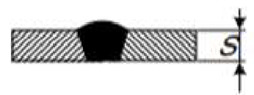
(a) Continuous fillet weld
(b) Flat fillet weld
(c) Groove weld
(d) Lap weld
SSC JE PAPER SOURCE
EXAM AGENCY - EDUQUITY
PAPER MAKING- Cubastion Consulting Pvt. Ltd.
OLD- TCS
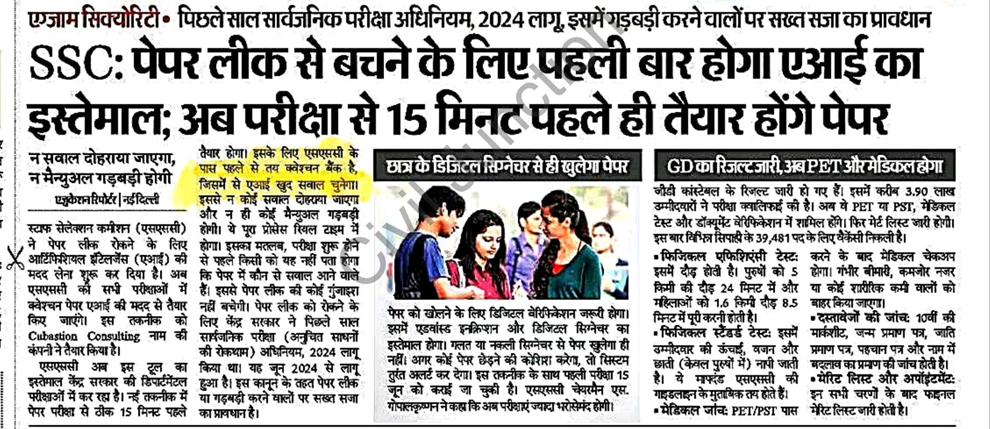
DDA JE, DSSSB JE AE, BSF SI , JSSC JE , MAHARASHTRA(PMC,WCD,TPA, PWD,MHADA,WRD), DFCCIL, GSSSB AAE,HPCL,NHPC ,THDC,CRIS JE, MPPGCL,TNPSC AE,UPPCL AE, BHEL ET,CRPF AC ETC PAPERS BY TCS.
Subject | Author / Publication |
BMC | RANGWALA |
Estimation | B.N. Dutta |
Survey | B.C. Punmia / N.N. Basak / S.K. Duggal |
Soil Mechanics | K.R.ARORA / B.C. Punmia /Gopal Ranjan and A.S.R. Rao/Dr. P.N. MODI |
Fluid Mechanics (FM) | R.K. Bansal / Modi & Seth |
Irrigation | S.K. GARG/ B.C. Punmia / Dr. P.N. Modi |
Hydrology | K. Subramanya / S.K. Garg |
Transportation | S.K. Khanna & C.E.G. Justo |
Environment | S.K. Garg / B.C. Punmia |
SOM (Strength of Materials) | Barry J. Goodno , James M. Gere / R.K. Bansal |
Structure Analysis | R.C. Hibbeler |
RCC | Pillai & Menon / B.C. Punmia / N. Krishna Raju /Neelam Sharma |
Steel | S.K. Duggal |
BOOKS:
CIVIL ENGINEERING
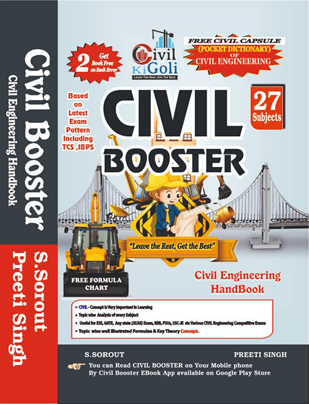
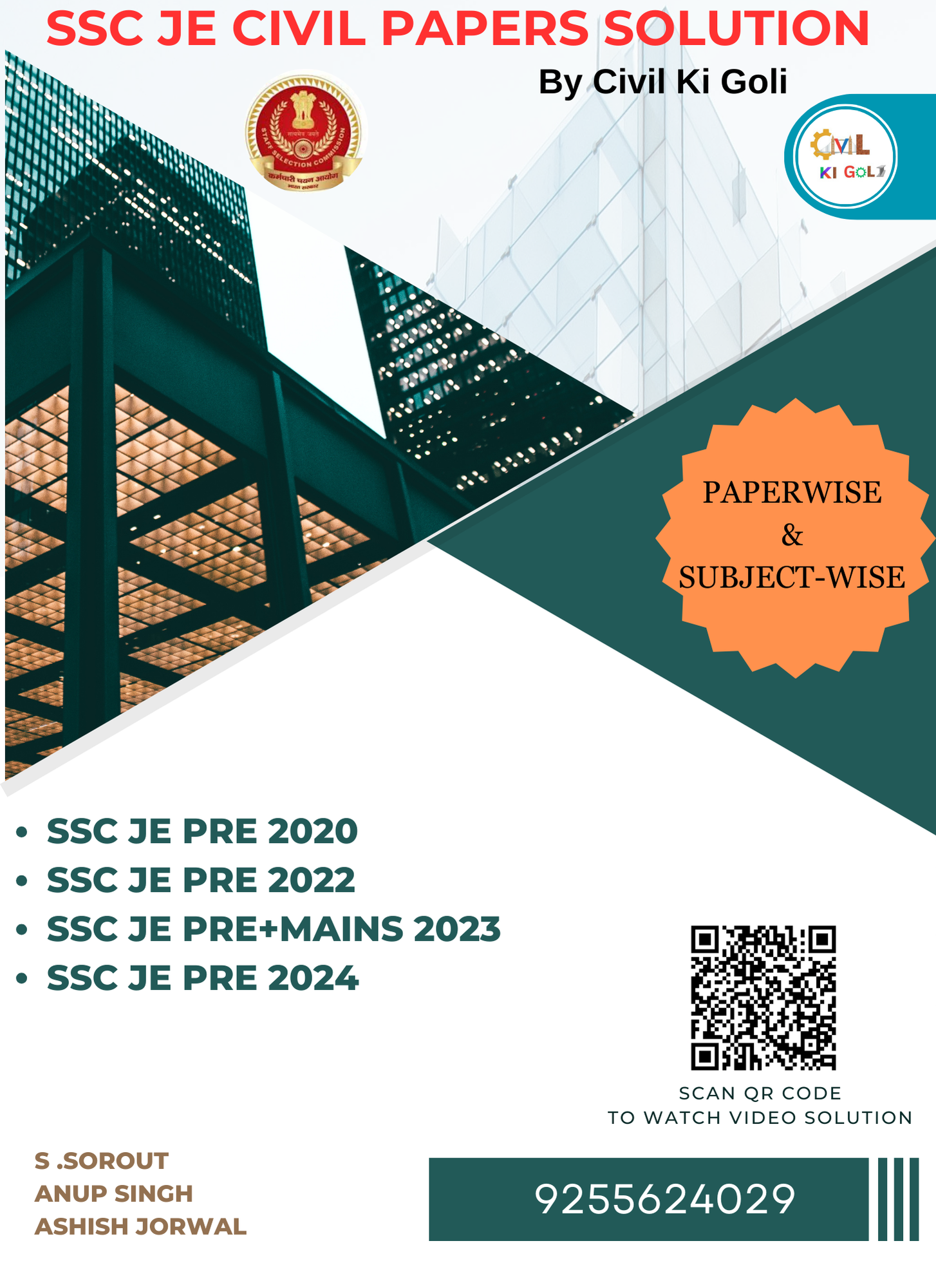
PYQ SOLUTION – SSC JE PYQ VIDEO SOLUTION WITH PDF AVAILABLE ON OUR CHANNEL.
CURRENT AFFAIRS:- AVAILABLE FREE ON OUR CHANNEL- PDF+TEST+VIDEO
& SPEEDY CURRENT AFFAIRS BOOK
TASK TABLE :-
SUBJECT |
|
|
|
|
|
|
|
|
|
BMC | PYQ-1 | CIVIL BOOSTER-1 | NOTES-1 | MCQ-1 | PYQ-2 | BOOSTER-2 | NOTES-2 |
|
|
SOM |
|
|
|
|
|
|
|
|
|
Estimation |
|
|
|
|
|
|
|
|
|
Survey |
|
|
|
|
|
|
|
|
|
RCC |
|
|
|
|
|
|
|
|
|
CONCRETE TECHNOLOGY |
|
|
|
|
|
|
|
|
|
FM |
|
|
|
|
|
|
|
|
|
HYDRAULIC MACHINE |
|
|
|
|
|
|
|
|
|
OCF |
|
|
|
|
|
|
|
|
|
IRRIGATION |
|
|
|
|
|
|
|
|
|
HYDROLOGY |
|
|
|
|
|
|
|
|
|
Environment |
|
|
|
|
|
|
|
|
|
HIGHWAY |
|
|
|
|
|
|
|
|
|
RAILWAY |
|
|
|
|
|
|
|
|
|
AIRPORT |
|
|
|
|
|
|
|
|
|
Soil |
|
|
|
|
|
|
|
|
|
FULL LENGTH TEST |
|
|
|
|
|
|
|
|
|
MARKS |
|
|
|
|
|
|
|
|
|
TEST SERIES:
TIME Management – 120 minutes -200 MCQs
- MAKE A SEPARATE REGISTER OR ADD CONTENT IN YOUR NOTES FROM TEST SERIES
CIVIL KI GOLI
- QUESTIONS AS PER LATEST PATTERN
- MULTIPLE STATEMENTS BASED
- ASSERTION REASON
- IS CODE BASED QUESTIONS TEST
- IMAGE BASED QUESTION TEST
- COLUMN MATCH BASED QUESTION TEST
- INCORRECT / CORRECT OPTION TYPE BASED QUESTION TEST
- PREVIOUS YEARS PAPERS AS A TEST
- MIX QUESTIONS TEST
- FREE SSC JE CIVIL PYQ (2017-2024) EBOOK PDF
- 10,000 GENERAL AWARENESS ONE LINER QUESTIONS EBOOK
STUDY MATERIAL - JOIN US ON TELEGRAM WE WILL PROVIDE SO MANY STUDY MATERIAL AT A SINGLE PLACE.
OVERALL EXAM STRATEGY -
- Gather study materials - Collect the best study materials, including textbooks, reference books, previous years' question papers, and online resources. Make sure you have access to updated and relevant study materials. Write down extra important data in relevant chapter or in a separate new register.
- Time management -Create a study schedule that allocates sufficient time for each subject and topic. Set realistic targets for daily or weekly study, ensuring you cover the entire syllabus sufficient number of times , before the exam.
- Clear your concept - Focus on building a strong foundation in core subjects. Understand the fundamental concepts and theories thoroughly. For weak topics , Practice extra questions
- First solved previous year question papers - to know the pattern and type of question and help you identify the important topics. It will also improve your time management skills , solved previous year questions atleast 3-4 times.
- Test series : Take regular mock tests to assess your preparation level and identify areas where you need improvement. Mock tests will help you understand the exam environment and manage time effectively during the actual exam
- Seek Guidance: If you face any difficulties or have doubts, don't hesitate to seek guidance from mentors, teachers, or online forums. Joining a coaching institute or studying in a group can also provide valuable insights and support.
- Stay Healthy: Maintain a healthy lifestyle with proper sleep, exercise, and a balanced diet. A healthy body and mind will enhance your concentration and overall performance in the exam.
- Stay Positive and Motivated: Maintain a positive attitude throughout your preparation journey. Surround yourself with a supportive environment and stay motivated. Take breaks, indulge in hobbies, exercise, and relax to keep your mind fresh and focused
- Revision: Dedicate enough time for regular revision of all the subjects. Revise formulas, concepts, and important points to enhance your retention and understanding. You can make your own short notes or refer civil booster handbook
- Remember, consistent and dedicated effort is the key to crack any competitive exam. Stay focused, maintain discipline in your study routine, and give your best in the exam.
Good luck!
📊 Score Boosting Plan (Based on PYQ Weightage)
Subject | Avg. Weightage | Suggested Focus |
BMC | 17.4 | ✅ High priority |
RCC + CT | ~18 | ✅ High priority |
SOM + SA | 9.29 | ✅ High priority |
FM + HM + OCF | 9.07 | ⚠️ Medium |
Environment | 6.69 | ⚠️ Medium |
Airport/RAILWAY | <5 | ❌ Low focus |
🧠 Smart Revision Strategy
- Revise full syllabus at least 3 times.
- Last 10 days:
- 6 days → Rapid topic revision + PYQs
- 3 days → Mock test + analysis
- Last day → Formula & short note revision
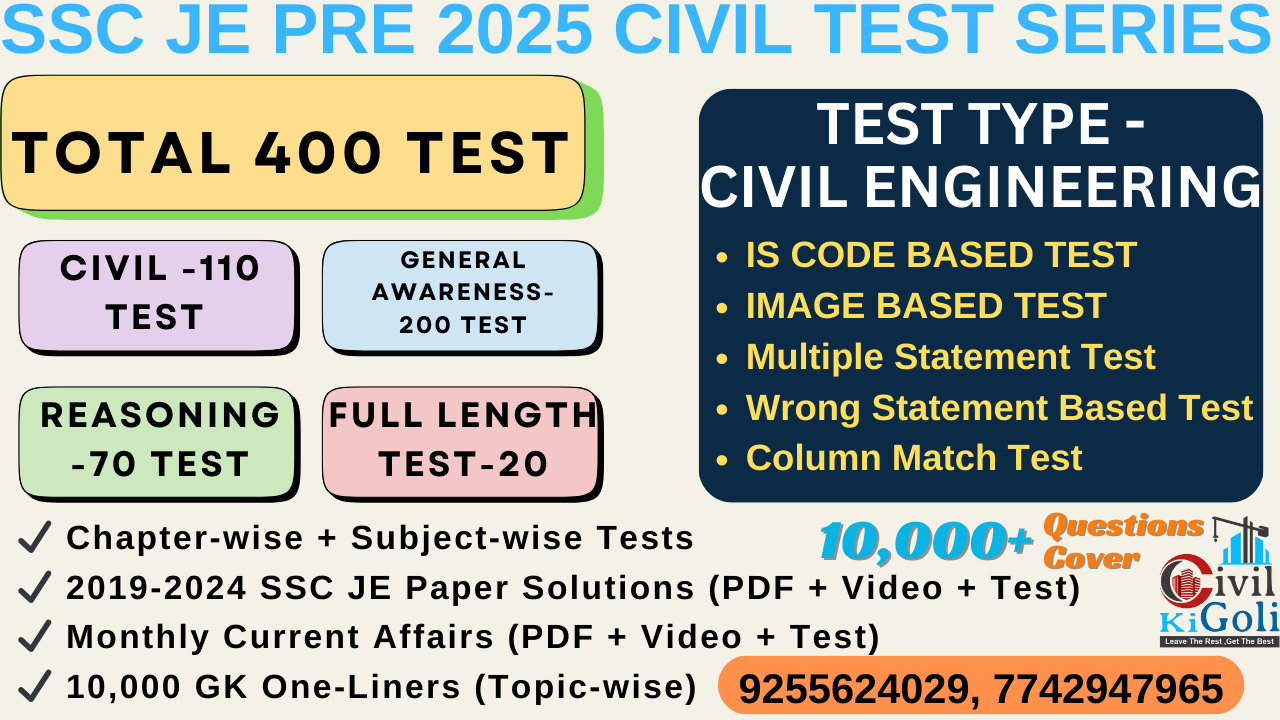
📢 SSC JE PRE CIVIL 2025 - Mega Test Series 💥
🎯 400 Total Tests Just at ₹99
📘 Test Breakdown:
🔹 110 Civil Engineering Tests
🔹 200 General Awareness (GK)
🔹 70 Reasoning
🔹 20 Full-Length Tests
📌 10,000+ Questions Covered
📚 Included:
✔️ Chapter-wise + Subject-wise Tests
✔️ 2019-2024 SSC JE Paper Solutions (PDF + Video + Test)
✔️ Monthly Current Affairs (PDF + Video + Test)
✔️ 10,000 GK One-Liners (Topic-wise)
🛠️ Test Types Covered(Civil):
🔸 IS Code-Based
🔸 Image-Based
🔸 Multiple Statement
🔸 Column Match
🔸 Wrong Statement
📊 Subject-Wise Revision Charts Included
📖 More Content Updates & Surprises Included
📱Android App https://play.google.com/store/apps/details?id=co.groot.aevsr
🖥 Laptop https://civilkigoli.com/
🍏iPhone/ Ipad users : https://apps.apple.com/in/app/my-coaching-by-appx/id1662307591
org code : 6916099
📞9255624029, 7742947965
🚀 Ready to boost your SSC JE Civil 2025 preparation?
👉 [Enroll Now – 400 Tests @ ₹99 Only](https://civilkigoli.com/new-courses/63/content?activeTab=Content)
🚀 SSC JE Civil 2025 Test Series – Boost Your Preparation with 400 Tests @ ₹99
SSC JE (Staff Selection Commission Junior Engineer) 2025 exam is one of the most competitive exams for civil engineering aspirants. Thousands of students prepare every year, but only those succeed who practice with the right strategy and enough mock tests.
To help students achieve success, Civil Ki Goli has launched the SSC JE Civil 2025 Mega Test Series – designed by experts, affordable for everyone, and focused on real exam-level practice.
📌 Why Mock Tests Are Important for SSC JE Civil 2025?
Many students prepare notes and study material but fail to revise and practice properly. Mock tests play a crucial role because they:
Build time management skills for the real exam.
Improve accuracy and speed with repeated practice.
Highlight weak areas where more study is needed.
Give a real exam-like experience before the final day.
Boost confidence and reduce exam stress.
🎯 What You’ll Get in SSC JE Civil 2025 Mega Test Series?
Civil Ki Goli brings you the most comprehensive and affordable test package:
✅ 400 Total Tests @ Just ₹99
110 Civil Engineering Tests
200 General Awareness (GK) Tests
70 Reasoning Tests
20 Full-Length Mock Tests
📘 Special Features
Chapter-wise & Subject-wise Tests
Coverage of 2019–2024 SSC JE Questions
Detailed Solutions & Explanations
Access Anytime, Anywhere (Mobile + Laptop)
👉 Price: Only ₹99 (Limited Time Offer)
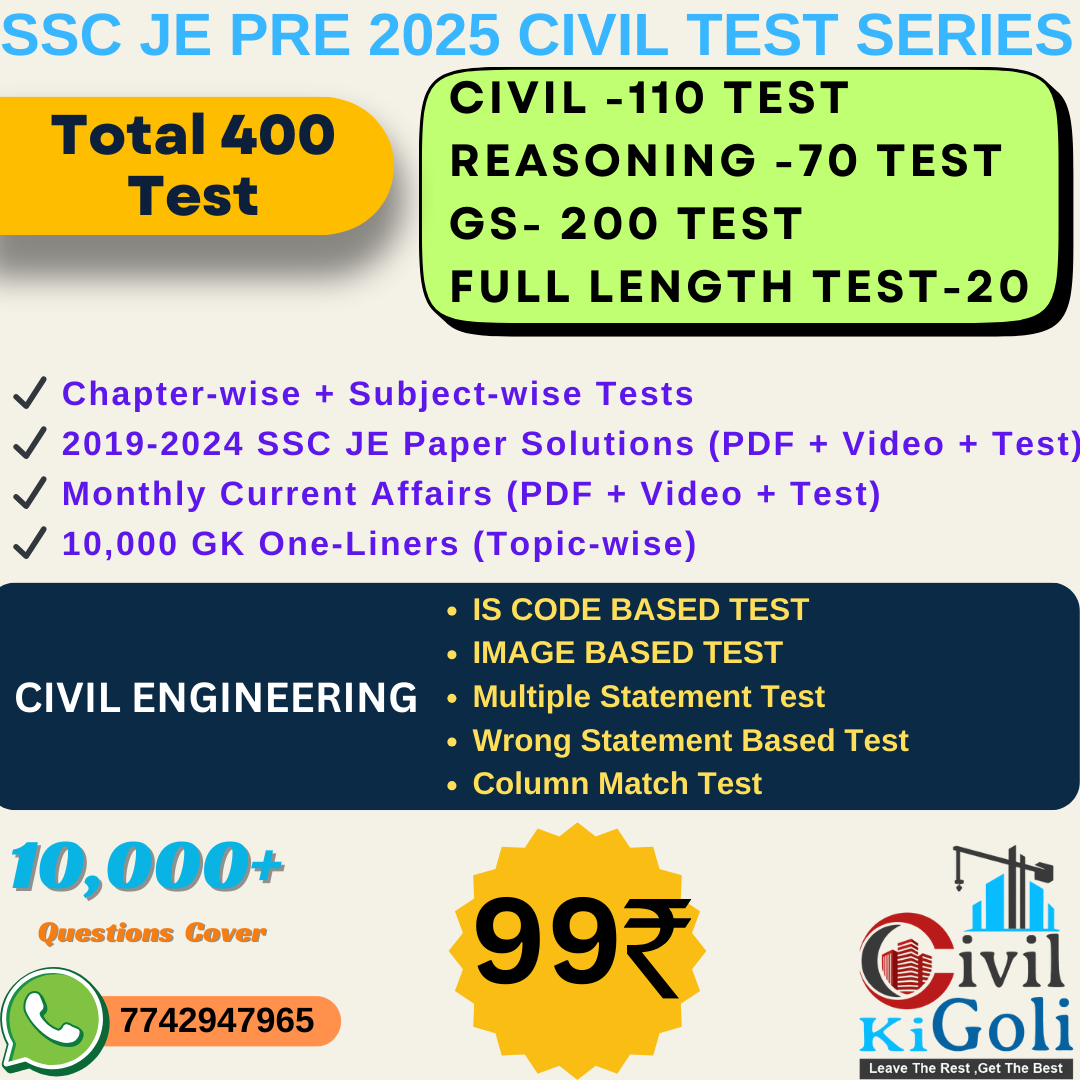
(Here insert your poster image – SSC JE TEST SERIES.png)
ALT Text: SSC JE Civil 2025 Mega Test Series – 400 Tests at ₹99
📊 How This Test Series Will Help You Crack SSC JE Civil 2025
Systematic Practice: Divided chapter-wise for step-by-step learning.
Real Exam Simulation: Same difficulty level as SSC JE.
Affordable Learning: Just ₹99 for 400+ tests – cheapest in the market.
Expert-Curated Content: Prepared by civil engineering subject experts.
Result-Oriented: Students from our test series have scored higher accuracy & better ranks.
🔑 Who Should Enroll?
Civil engineering students targeting SSC JE 2025
Aspirants who want exam-like practice at home
Candidates struggling with time management & accuracy
Students who need complete coverage (Civil + GK + Reasoning)
🚀 How to Join SSC JE Civil 2025 Test Series?
It’s super easy!
👉 Click the link below, enroll, and start practicing today:
🔗 Enroll Now – SSC JE Civil 2025 Test Series (400 Tests @ ₹99)
💡 Additional Preparation Tips for SSC JE Civil 2025
Make a daily study plan with fixed hours for revision + practice.
Attempt at least 1 mock test daily.
Focus on PYQs (Previous Year Questions) for better accuracy.
Revise formulas, IS codes, and important civil engineering concepts weekly.
Stay updated with General Awareness & Current Affairs.
🎯 Final Words
Preparation without practice is incomplete. If you want to secure your dream job as a Junior Engineer (Civil) in 2025, then this SSC JE Civil Mega Test Series will be your ultimate weapon.
🔥 Don’t miss this opportunity – 400 Tests @ ₹99 is a once-in-a-lifetime offer.
👉 Enroll Now and Boost Your SSC JE Civil 2025 Preparation
SSC JE Civil Test Series 2025
SSC JE Civil Mock Test 2025
SSC JE Civil Previous Year Papers
SSC JE Civil Online Practice Test
SSC JE Civil Preparation 2025